
EIM presents the first global report on the environmental impact of denim finishing
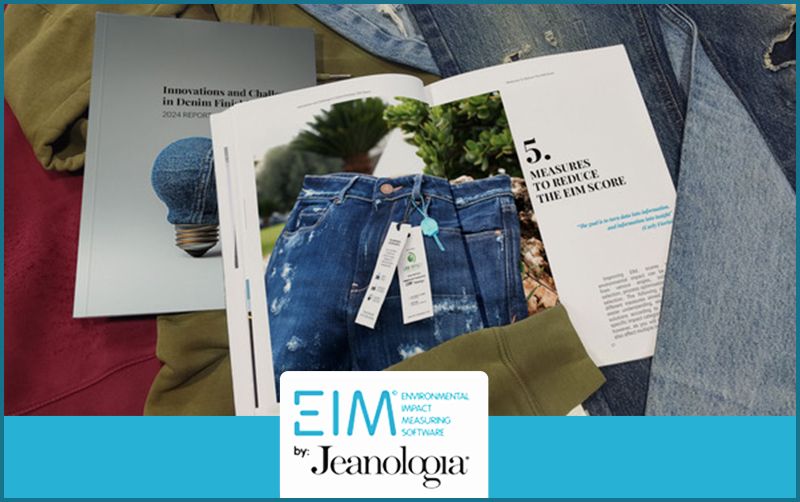
08 April 2025: EIM (Environmental Impact Measuring), the leading global platform for measuring the environmental impact of garment finishing – trusted by the world’s top brands and textile production centers – presents the “Innovations and Challenges in Denim Finishing: 2024 Report.” This pioneering report provides an analysis based on accurate, objective data from over 115,000 denim finishing processes collected through the EIM platform, setting new benchmarks for sustainability in the industry.
Report reveals that 63% of the analyzed processes are already classified as low environmental impact, reflecting a positive shift toward more responsible practices. However, it also highlights critical challenges, such as the high use of hazardous chemicals (24% of processes), particularly pumice stones and potassium permanganate – practices that urgently require safer and more sustainable alternatives due to their negative effects on both the environment and worker health.
Progress in water consumption management is also considered, as this remains one of the key environmental challenges for the textile sector. The report shows that the current average water usage in denim finishing is 30 liters per garment – still above the recommended benchmark of 22.5 liters per garment. Effective strategies for reducing water consumption include optimizing rinsing processes, selecting fabrics that require less aggressive treatments, and implementing technologies such as ozone, e-flow and smart foam systems.
Among the proposed improvements are also the adoption of advanced technologies to reduce chemical use and protect worker health, such as the strategic selection of ZDHC-certified chemicals and the automation and digitalization of manual processes.
Begoña García, creator of the EIM platform and co-author of the report, said “For years, the textile industry has lacked reliable tools to measure its environmental impact, making data-driven decisions difficult. This report marks a crucial step toward transparency and continuous improvement, showing that technology is key to measuring and reducing environmental impact.”
EIM: The global standard for measuring impact in textile finishing
Developed in 2009 and globally adopted since 2011, EIM has become the go-to global tool for measuring the environmental and social impact of textile finishing processes. Through this software, a global ecosystem has been built involving over 100 brands and retailers, as well as more than 500 laundries and production centers worldwide.
Developed in 2009 and globally adopted since 2011, EIM has become the go-to global tool for measuring the environmental and social impact of textile finishing processes. Through this software, a global ecosystem has been built involving over 100 brands and retailers, as well as more than 500 laundries and production centers worldwide – all using EIM to assess and reduce their environmental footprint across the entire supply chain.
EIM has been integrated into the sustainability strategies of companies across the market spectrum – from denim giants like Levi’s, Tommy Hilfiger, and Guess, to leading retailers and fashion brands such as H&M, AEO, Primark, C&A, Mango, Jack & Jones, and Springfield, along with major retail groups such as M&S and F&F Tesco. Leading laundries and finishing centers have also adopted the tool, expanding its impact from production to final product.