
BIG & ICON Create 3D-Printed Mars Habitat for NASA
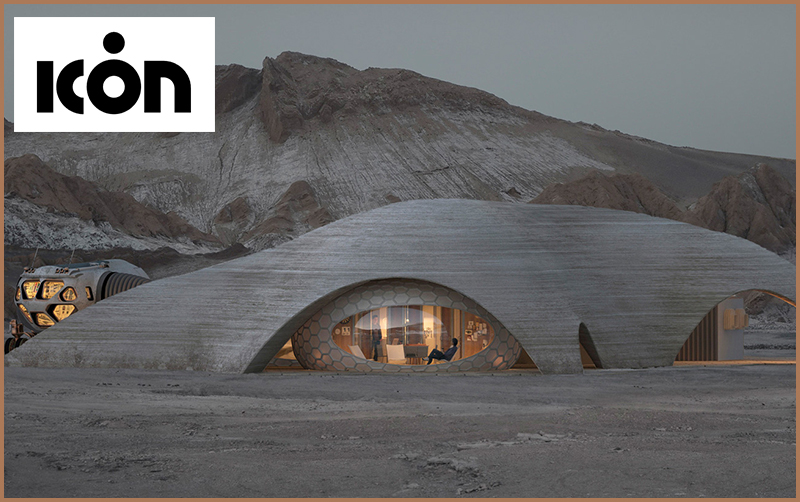
01 January 2026: NASA’s collaboration with BIG (Bjarke Ingels Group) and ICON to create a 3D-printed Mars habitat has been one of the most innovative steps in space exploration. The second year-long mission, will continue to test the sustainability and livability of the habitat in conditions similar to those on Mars. This habitat, built using ICON’s advanced 3D-printing technology, is designed to simulate how astronauts might live and work on the Martian surface. It features cutting-edge design and materials meant to withstand the harsh Martian environment, including extreme temperatures and radiation.
NASA and ICON are pushing 3D printing closer to space missions by testing how Moon soil behaves in lunar gravity and advancing a laser-based system to turn that soil into building material for habitats, landing pads, and roads on the Moon and Mars.
Over the last few years, NASA has supported Texas-based construction tech company ICON in developing 3D printing systems that use local planetary material, or regolith, to build infrastructure off-Earth. This partnership began with NASA’s 3D Printed Habitat Challenge and evolved through various programs, including the Small Business Innovation Research (SBIR) initiative and CHAPEA, NASA’s ongoing Mars habitat simulation at Johnson Space Center.
The latest milestone came in February 2025, when ICON launched an experiment called Duneflow aboard a Blue Origin reusable rocket as part of NASA’s Flight Opportunities program. During the flight, the rocket simulated lunar gravity for about two minutes, giving ICON and NASA researchers a chance to study how simulated Moon dust behaves in low-gravity conditions. The goal was to compare the flow and characteristics of this simulant with real lunar regolith samples collected during the Apollo missions. These insights are key for developing automated 3D printing systems that can work well in different gravity environments.
ICON’s 3D printing technology has been making headlines for years. The company used its Vulcan construction system to 3D print full-size homes in Texas and other parts of the US, proving that robotic construction at scale is possible. ICON’s Earth projects have helped test ideas that could work in space. NASA saw this potential and backed ICON through several programs to adapt their technology for use beyond Earth.
ICON is also behind Mars Dune Alpha, a 1,700-square-foot simulated habitat built at NASA’s Johnson Space Center in Houston. The structure is part of the CHAPEA (Crew Health and Performance Exploration Analog) project, where volunteer crews live and work in a Mars-like environment for a full year. The habitat, created using ICON’s Vulcan printer, helps test how 3D printed living spaces could support long-duration missions to the Red Planet.
Taken together, NASA and ICON’s collaboration represents one of the most advanced efforts to bring 3D printing into space construction. In fact, NASA and ICON’s ongoing collaboration is now entering a critical testing phase, moving closer to using 3D printing to build real structures on the Moon and Mars using on-site resources.
https://www.iconbuild.com