

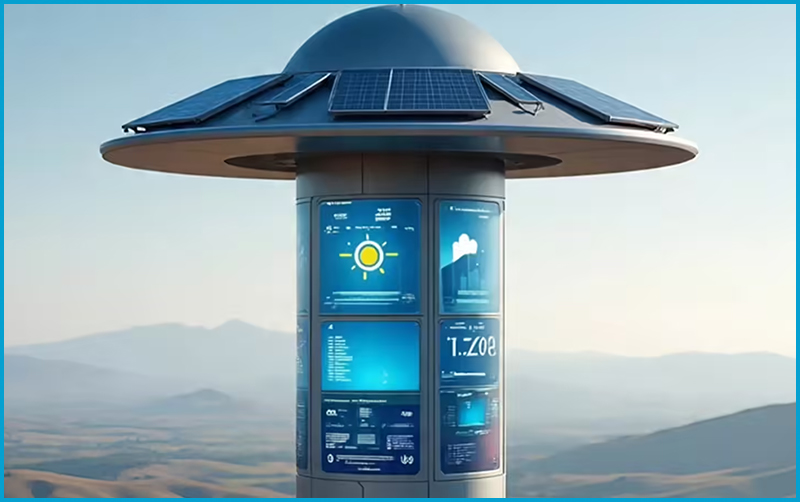
3D-Printed Automatic Weather Stations (AWS) to be Deployed at New Delhi
13 January 2026: Scientists from Indian Institute of Tropical Meteorology (IITM), Pune have begun developing 3D printed Automatic Weather Stations (AWS) to increase the number of weather observation points across the country. The first batch of these next-generation stations will be deployed in Delhi from February 2026, marking a major step towards strengthening India’s weather observation network.
The initiative is being led by the Indian Institute of Tropical Meteorology under the Ministry of Earth Sciences as part of Mission Mausam, a Rs.2,000 crore national programme aimed at upgrading meteorological infrastructure. Mission Mausam focuses on eliminating data gaps in weather observations, especially in urban and climate-sensitive regions, to improve forecast accuracy.
Unlike conventional systems, the new AWS units are fully manufactured domestically using 3D-printing technology under the Make in India initiative. These stations automatically record parameters such as temperature, wind speed, humidity and rainfall and transmit data in real time. The use of 3D printing significantly reduces production costs, allows flexible geometric design, and enables faster large-scale deployment. All units are solar-powered, making them suitable for remote and urban locations alike.
Delhi will be the first city to receive the new stations, followed by other major urban centres including Mumbai, Kolkata, and Chennai over the next six months. To ensure accuracy, the 3D-printed AWS will initially be installed alongside existing manual observatories for rigorous testing, calibration, and validation. Earlier concerns over faulty AWS data due to sensor damage and improper siting have informed stricter quality protocols for the new rollout.
Currently, the India Meteorological Department operates over 1,000 AWS, along with manual observatories and rain gauges nationwide. Scientists have long highlighted that this density is inadequate for hyper-local forecasts, particularly in urban microclimates and complex terrains such as the Himalayas. The deployment of 3D-printed AWS is expected to significantly enhance last-mile data coverage and improve forecasting as weather patterns become increasingly erratic.