

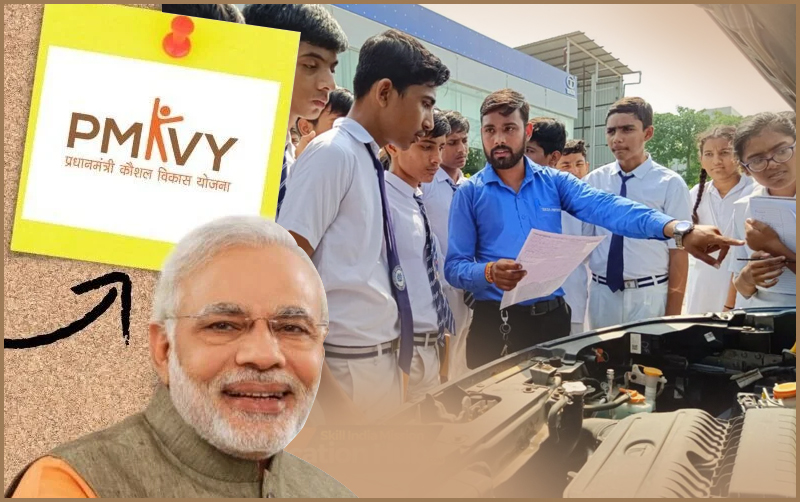
India Expands Skill Training as PMKVY 4.0 Reports Employment Gains
05 August 2026: The Government of India is expanding Skill India training in rural, tribal and aspirational districts while tightening the monitoring of centres under Pradhan Mantri Kaushal Vikas Yojana 4.0.
The Ministry of Skill Development and Entrepreneurship said the expansion would include more training infrastructure, wider coverage of underserved areas and stronger coordination through State Skill Development Missions. Minister of State (Independent Charge) Jayant Chaudhary provided the information in a written reply to the Lok Sabha.
Training network covers several schemes
The Skill India Mission delivers training, reskilling and upskilling through schemes including PMKVY, Jan Shikshan Sansthan, the Pradhan Mantri National Apprenticeship Promotion Scheme and the Craftsmen Training Scheme through Industrial Training Institutes.
PMKVY 4.0, implemented for the 2022–26 period, covers short-term training, Recognition of Prior Learning and special projects. Its official guidelines give special attention to aspirational, backward, border, tribal and Left-Wing Extremism-affected districts.
Evaluation reports employment and income gains
According to the Ministry, an impact evaluation by the Arun Jaitley National Institute of Financial Management found that the combined share of employed and self-employed short-term training respondents rose from 26.6% before training to 45.4% afterwards. This was an increase of 18.8 percentage points.
The Ministry also reported that 41.4% of short-term training respondents and 48.9% of Recognition of Prior Learning respondents said their income increased after training and certification. These figures describe outcomes reported by surveyed candidates; the public statement did not provide the study’s sample size, methodology or a breakdown of job quality and earnings.
Face-authentication system strengthens monitoring
PMKVY’s controls include Aadhaar-based enrolment, face-authenticated biometric attendance, call validation, physical and virtual inspections, candidate feedback and outcome-linked payments. The current monitoring guidelines also use geofencing and dashboard alerts to identify centres or batches with attendance and compliance problems.
Training providers and centres can face penalties for fake enrolments, missing infrastructure, unauthorised outsourcing and unethical practices. Serious violations may lead to suspension or blacklisting.
The expansion could improve access to formal training in difficult-to-reach districts. Its longer-term value, however, will depend on training quality and whether certification translates into stable work and sustained income growth.