



R|Elan Circular Design Challenge selected Anil Padia of Yoshita 1967
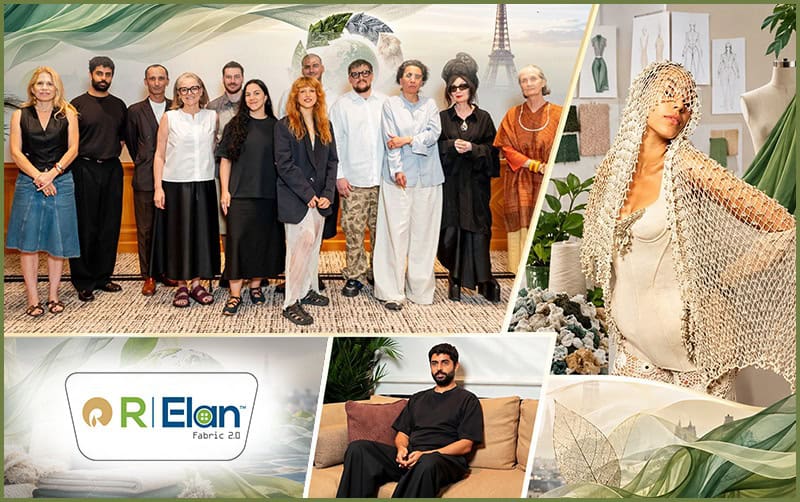
18 September 2026: The R|Elan Circular Design Challenge selected Anil Padia of Yoshita 1967 as its European finalist when its regional jury met in Paris on 5 July 2026. The selection advances the designer to the programme’s Grand Jury in New Delhi and brings a cross-border, craft-led label into its international competition.
Circular Design Challenge links French and Indian fashion
The official India-France Year of Innovation account identifies Reliance Industries Limited, the United Nations in India and Lakmē Fashion Week as organisers. The Fédération de la Haute Couture et de la Mode (FHCM) partners on the initiative, with support from the French Institute in India and the Embassy of France in India.
The 2026 programme forms part of the India-France Year of Innovation. Its European track received 18 applications, including seven from France, according to the official account. Six designers reached the European semifinal, with three representing France.
R|Elan’s involvement also connects the competition to a fabric brand with applications beyond designer collections. Screen Print India previously covered its collaboration with R. R. Lene in corporate and school uniforms.
Why Yoshita 1967 stood out
Yoshita 1967 operates across Paris, Nairobi and Delhi. The programme’s account describes Padia’s womenswear as combining handmade construction and embellishment with traditional techniques, viewed through a Kenyan-Indian perspective. Its stated approach places people, alongside products, at the centre of circularity.
The Paris jury included Pascale Mussard, Sara Sozzani Maino, Serge Carreira, Diane Pernet, Anne-Gaëlle Lamort and Katell Pouliquen. Together, their backgrounds span fashion institutions, luxury, sustainability and publishing.
What circular design meant for the semifinalists
The other European semifinalists were Iman Coccellato, Matthieu Ruiz, Dmytro Hontarenko, Joana Duarte and Flora Rabbiti. Their profiles describe different ways to keep materials and garments in use rather than relying solely on new inputs.
Coccellato works with deadstock luxury fabrics, while Ruiz uses plant-based dyeing. Hontarenko’s PLN-GNS treats discarded sneakers and fashion leftovers as raw materials, with repair, resale, buy-back and disassembly forming part of its approach. Duarte’s BÉHEN combines antique textiles, upcycled garments and deadstock, while Rabbiti’s Florania works with discarded textiles and industrial waste.
Those repair and resale models connect with a wider commercial discussion, including eBay’s circular fashion work. They also show why circularity cannot mean recycling alone: keeping a finished garment in use differs from recovering its fibres.
For textile producers and processors, material recovery raises a separate set of practical questions. Screen Print India’s coverage of the Green Machine recycling partnership examines that industrial side of the subject. The Paris designer profiles, by contrast, focus on how material choices and garment construction shape a collection.
What happens after the Paris selection?
The official programme announcement says Padia will advance to the Grand Jury at the United Nations premises in New Delhi. It schedules the international finale for October 2026 at the Embassy of France in India, Delhi, in association with Lakmē Fashion Week and FDCI. His Paris selection is a regional result, not the overall competition award.
Sorry, the comment form is closed at this time.