



Clothes for Conscience: Children’s Academy Students Reuse Fabric
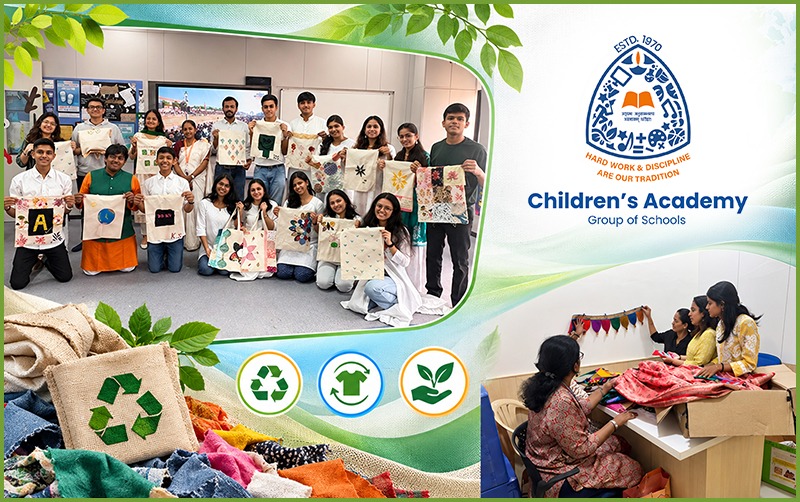
11 September 2026: Children’s Academy International School in Mumbai describes a student fabric-reuse initiative, Clothes for Conscience, in a brief received on 10 September 2026. The project connects practical making with lessons about textile waste and consumption.
How Clothes for Conscience puts fabric back to use
Students reclaim discarded fabrics to make cloth bags, jewellery and accessories. Working with Indian textiles and exploring craftsmanship forms part of the activity, which asks learners to consider a material’s life beyond its original use.
The school’s official IBCP page confirms that Children’s Academy International School offers the programme in Mumbai, combining academic study with practical career-related learning. That page does not independently establish the details of Clothes for Conscience.
The stated educational aim is to make sustainability something students practise. Rather than discussing waste only as an abstract problem, they work with remnants and consider what useful objects those materials could become. The brief also describes learning about consumption habits and the environmental costs of fashion.
What does India’s 7.7-million-tonne estimate cover ?
Fashion for Good’s Sorting for Circularity India project cites approximately 7.7 million tonnes of textile waste annually. Its breakdown includes pre-consumer waste, domestic post-consumer waste and imported waste. The figure therefore should not be described simply as clothing discarded by Indian households, nor as a fresh measurement for 2026.
The project’s research ran between 2021 and 2023, with its Wealth in Waste report released on 27 July 2022. This distinction matters: an estimate of the wider waste stream provides context for a school project, but it does not measure that project’s contribution.
Screen Print India’s coverage of textile reuse and recovery explains the wider Indian policy focus on waste mapping, recovery facilities and upcycled products. Student activities belong within this broader discussion without replacing industrial collection and processing.
A learning exercise, not a measured waste solution
Turning usable remnants into bags or accessories is a practical reuse activity. It is different from collecting mixed waste at municipal scale or processing material back into fibre. Earlier reporting on Pune’s proposed textile-waste facility illustrates the separate infrastructure challenge; that report described a proposal, not an operating plant.
Similarly, Screen Print India’s report on the Circular Fashion Partnership Türkiye describes plans for factory waste segregation, traceability and recycler connections. Those are different tasks from a classroom reuse project, even when both aim to keep textile materials in use.
For Clothes for Conscience, the supplied account gives no participant total, recovered-fabric weight, product count or evidence of continued product use. Its supported framing is an educational initiative described by the brief, not a demonstrated reduction in India’s national waste burden.
The Children’s Academy Group of Schools says it began in 1970 under founder V.V. Bhat and now serves more than 8,000 students across four campuses in Mumbai and Thane. Those are group-wide figures, not the number of students taking part in this project.

Sorry, the comment form is closed at this time.