



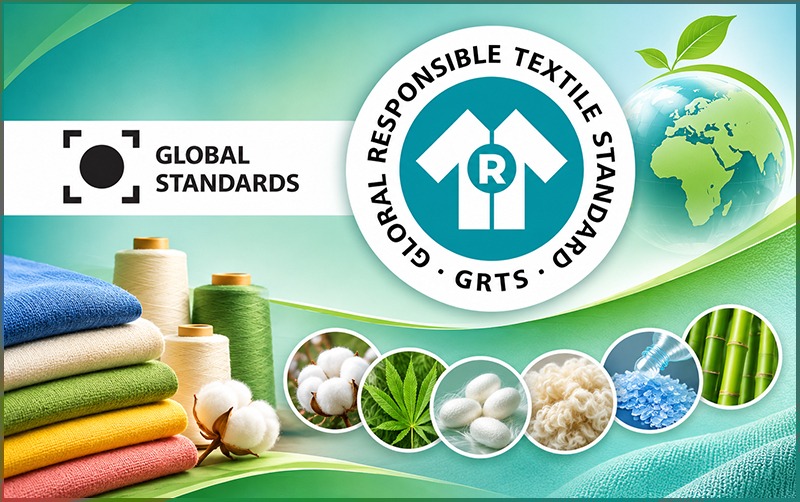
Global Standards Launches Global Responsible Textile Standard for Wider Fibre Range
12 November 2026: Global Standards, the non-profit owner of the Global Organic Textile Standard (GOTS), launched the Global Responsible Textile Standard (GRTS) in Stuttgart, Germany, on 14 September 2026. GRTS certifies the processing of textiles made from certified plant, animal, synthetic, man-made cellulosic and recycled fibres. This gives non-organic product lines a route into the same system as GOTS.
Until now, products that fell outside the organic fibre rules of GOTS had no matching certification route within the Global Standards system.
What does the Global Responsible Textile Standard require?
The Global Responsible Textile Standard sets requirements for environmental and chemical management, human rights, business conduct, due diligence and traceability. Fibres can enter the system only if they are certified to third-party fibre standards that GRTS recognises and also meet its social, ecological and traceability criteria. These criteria include:
- a ban on highly hazardous chemicals and genetically modified organisms (GMOs);
- chain of custody with identity preservation;
- social norms included in fibre production.
To qualify for GRTS certification, goods must contain at least 90% fibres certified to fibre standards that GRTS recognises.
How GRTS certification works
Accredited independent bodies carry out GRTS certification, and certification is required at every processing and trading stage. Transaction certificates, chain-of-custody rules and volume reconciliation help verify certified fibre content through the supply chain. The GRTS standard page adds that certified facilities face annual on-site audits.
Global Standards says GRTS is fully operational, with 27 certification bodies accredited to certify against it. Companies already certified to GOTS may find the move easier, since their existing systems and procedures can support a GRTS application.
Indian mills among the first certified
Seven of the nine first certified companies named by Global Standards are Indian: Esstee Exports India, Sulochana Cotton Spinning Mills, Armstrong Spinning Mills, Maral Overseas, Knit Gallery India, Arvind Limited and Daks India Industries. The other two are hessnatur in Germany and Veritas Tekstil in Türkiye. Each company’s certification body issued its certificate independently.
What Global Standards said
“GRTS is a strategic and exciting step for us. By offering a standard that covers fibres beyond organic and building it on the same system as GOTS, we support the industry’s business case for sustainability and enable more positive impact together.”
Claudia Kersten, Managing Director of Global Standards, made these remarks in the launch announcement. Global Standards now owns and operates both GOTS and GRTS.
As global brands increasingly prioritise responsible sourcing, chemical management and supply chain accountability, GRTS offers manufacturers an additional certification pathway covering diverse fibre categories.
The introduction of GRTS represents a significant expansion of responsible textile certification, supporting greater transparency, environmental accountability and sustainable manufacturing practices across international textile supply chains.
https://global-standards.org/our-standards/grts


Sorry, the comment form is closed at this time.