



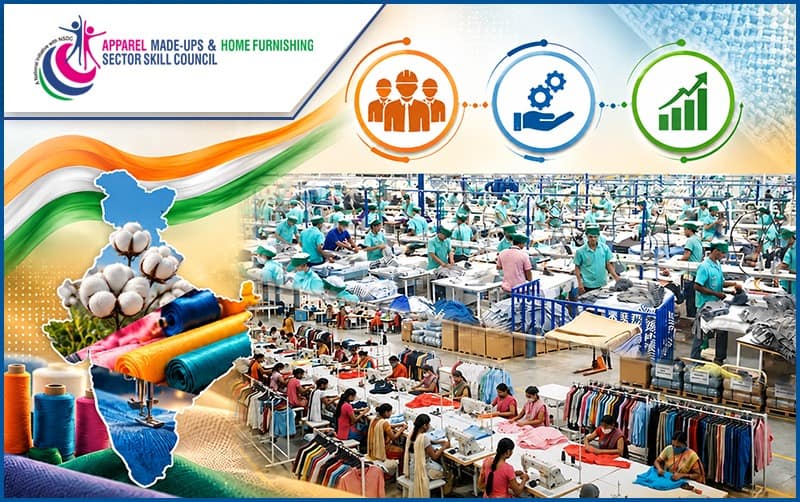
India’s Textile Skills Demand Could Add 14 Million Workers by 2030
17 September 2026: India’s textile and apparel sector could need nearly 14 million additional skilled workers by 2030, according to reports of an AMHSSC consultation held on 23 July 2026 in New Delhi. The workshop called for training tied to factory needs, with technology adoption and worker retention central to its recommendations.
The Apparel, Made-Ups & Home Furnishing Sector Skill Council (AMHSSC) organised the meeting at Hyatt Regency. Its official workshop account confirms that participants discussed workforce shortages, high attrition and training priorities for the Delhi NCR apparel cluster. The programme also included the release of its Manpower Skill Gap Study and the launch of a job portal.
What the textile skills forecast means
AMHSSC’s public workshop summary does not reproduce the employment forecast or explain its methodology. The estimate therefore needs attribution rather than treatment as an independently verified labour-market total. The connection between training and export capacity also featured in earlier ATDC industry training discussions, where speakers stressed matching vocational education to garment manufacturers’ requirements.
Technology needs training alongside investment
AMHSSC’s recommendations call for factories to pair automation, computer-aided design and digital tools with targeted reskilling and training across multiple tasks. Buying equipment alone does not address the workforce issues identified at the consultation.
For printing businesses, the related question is how automation changes operators’ responsibilities. Screen Print India’s printing workforce automation explainer presents a supplier’s perspective on reducing manual intervention in production and colour control. It offers operational context, rather than evidence for the national employment forecast.
Apprenticeships and retention shape the response
The workshop recommended expanding apprenticeships under NAPS and using regular skill-gap assessments to keep curricula close to shop-floor requirements. It also called for better workplace practices, line management and career pathways to improve retention.
That distinction matters: recruiting new trainees and keeping experienced workers require different responses. Training providers should assess practical competence against the jobs employers need to fill, while factories should examine why trained staff leave.
The Ministry of Textiles’ Samarth scheme sets out a demand-driven, placement-oriented approach to textile training and skill upgrading. Broader Skill India training coverage provides further context on access, monitoring and reported employment outcomes.
FAQs
Are 14 million textile jobs already available?
No. The figure represents additional workforce demand projected by 2030 in reporting on the consultation.
Which training priorities did AMHSSC identify?
The council identified apprenticeships, shop-floor-linked curricula and reskilling for automation, CAD and digital tools. Its recommendations also address retention through workplace improvements and clearer career pathways, rather than treating training enrolment alone as the solution.



Sorry, the comment form is closed at this time.