



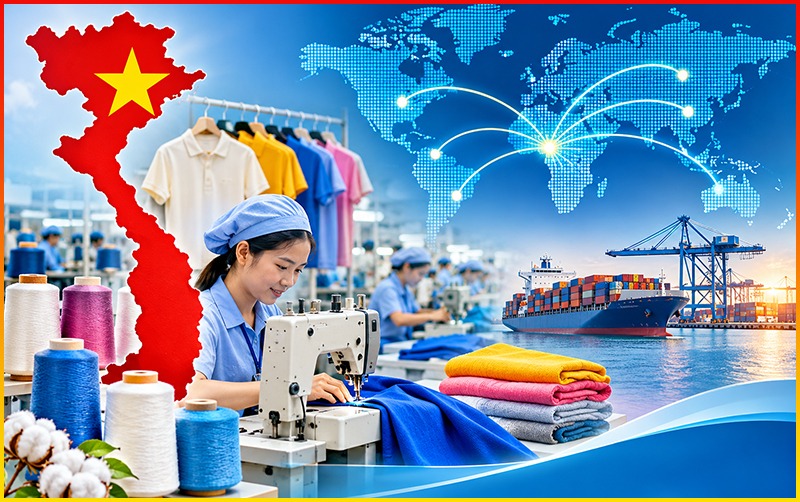
Vietnam Targets US$48 Billion in Textile and Garment Exports in 2026
20 November 2026: Vietnam’s textile and garment industry is targeting approximately US$48 billion in export earnings during 2026, supported by efforts to strengthen manufacturing efficiency, diversify international markets and accelerate sustainable production practices. The ambitious target comes amid changing global trade conditions, rising operational costs and increasing competition from major textile-producing countries.
According to the Vietnam Textile and Apparel Association (VITAS), the industry recorded export earnings of nearly US$31.7 billion during the first eight months of 2026, representing a 2.9% increase compared with the corresponding period of 2025. Exports exceeded US$36.43 billion during the first nine months, reflecting continued growth despite international market uncertainties.
Expanding International Market Opportunities
The United States remains Vietnam’s largest textile and garment export destination, accounting for approximately 40% of overseas shipments. Other important markets include the European Union, Japan, South Korea, China and ASEAN countries.
Vietnamese textile products currently reach 137 countries and territories, highlighting the industry’s extensive international presence.
However, changing tariff policies, increasing logistics expenses and rising raw material costs are placing pressure on manufacturers. Businesses are consequently prioritising higher-value orders, improved productivity and stronger supply chain management.
Focus on Technology and Sustainable Manufacturing
Vietnamese textile manufacturers are increasingly investing in automation, artificial intelligence, digital production systems and environmentally responsible manufacturing technologies.
Greater emphasis is being placed on energy efficiency, wastewater treatment, sustainable materials and compliance with international environmental standards.
The industry is also encouraging domestic production of fabrics, yarns and accessories to reduce dependence on imported inputs and strengthen supply chain resilience.
Strengthening Long-Term Competitiveness
VITAS Chairman Vu Duc Giang has emphasised the importance of digital transformation, sustainable manufacturing and higher-value production in maintaining Vietnam’s international competitiveness. The industry is gradually shifting towards advanced manufacturing, product innovation and integrated textile production.
While US$48 billion remains an ambitious objective, industry representatives have also identified US$47-47.5 billion as an achievable baseline, with stronger fourth-quarter performance potentially lifting exports towards the higher target.
Vietnam’s continued investment in manufacturing technology and sustainable production is expected to reinforce its position as a major global textile and apparel sourcing destination.



Sorry, the comment form is closed at this time.