
Vikram-1 Rocket Incorporates 3D-Printed System in the Upper Stage
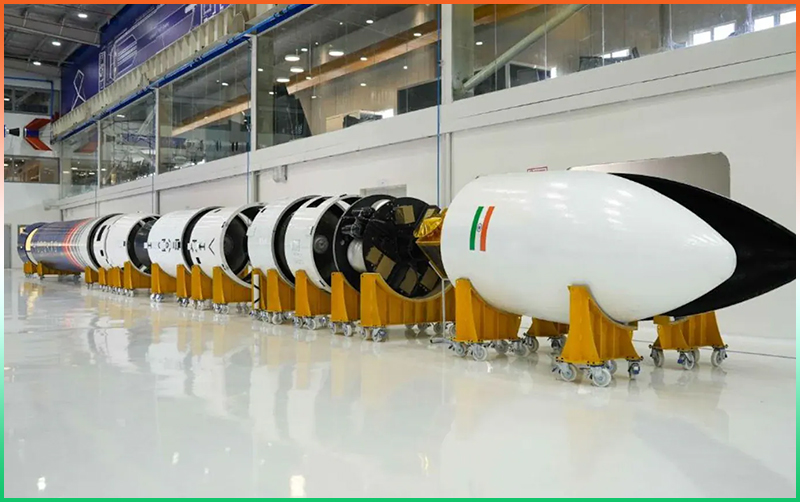
04 August 2026: Skyroot Aerospace’s Vikram-1 launch has put India’s private space sector in the headlines while also highlighting the expanding scope for 3D printing. The rocket, which incorporates a 3D-printed system in the upper stage, has marked an important achievement for he printing industry.
While Vikram-1 was not a fully 3D-printed rocket, it is still quite noteworthy. Its first three stages used solid propulsion, while its liquid-propellant Orbital Adjustment Module used a cluster of Raman-1 engines. Skyroot describes Raman-1 as India’s first fully 3D-printed orbital rocket engine.
Vikram-1 reached low Earth orbit on July 18, 2026, making it the first privately developed Indian rocket to achieve orbit. The test flight from the Satish Dhawan Space Centre at Sriharikota also demonstrated how additive manufacturing is moving from engine development into operational launch systems.
The four-stage rocket lifted off at 12:05 p.m. IST and reached its planned orbit of about 450 km roughly 15 minutes later. Mission Aagaman, meaning “arrival”, carried two CubeSats and hosted technology payloads, including an in-orbit robotic experiment and a German deployment demonstration.
The upper stage fired for about six minutes before the company confirmed that the vehicle had reached its intended orbit.
The successful flight gives India private orbital-launch capability alongside the United States and China. It follows policy changes that widened private participation in launch vehicles, satellites, ground systems and space-based services under the Indian Space Policy 2023.
Government data also show the sector’s rapid expansion. As per a PIB release India’s registered space start-ups increased from one in 2014 to more than 400 by February 2026. The government values India’s space economy at about USD 8.4 billion and projects it to reach USD 44 billion by 2033.
Skyroot was founded in 2018 by former ISRO engineers Pawan Kumar Chandana and Naga Bharath Daka. It previously flew the suborbital Vikram-S in November 2022. In May 2026, the company raised USD 60 million at a stated valuation of USD 1.1 billion, becoming India’s first space-technology unicorn.
Vikram-1 is designed to carry up to 350 kg to low Earth orbit or 260 kg to Sun-synchronous orbit. Skyroot has indicated that more test flights will precede regular commercial launches. Its larger Vikram-2, planned for 2027, is designed around a cryogenic upper stage and is advertised to carry up to 900 kg to low Earth orbit.