
EPS Sees Automation Lift Demand for Direct-to-Object Printing
10 July 2026: Engineered Printing Solutions (EPS) says manufacturers are showing stronger interest in automated direct-to-object (DTO) printing systems as labor shortages, skills gaps and higher wage pressure reshape production planning.
The Vermont-based company has passed the milestone of 100 single-pass DTO inkjet production systems, a figure EPS says reflects a wider move from standalone printing equipment toward automated decoration cells.
At a Glance ….
– Company: Engineered Printing Solutions (EPS)
– Segment: Direct-to-object printing and pad printing systems
– Key milestone: 100 single-pass DTO inkjet production systems
– Main driver: Manufacturers seeking lower labor dependency and more repeatable production
– Applications: Packaging, industrial, automotive, promotional, sporting goods, medical and consumer products
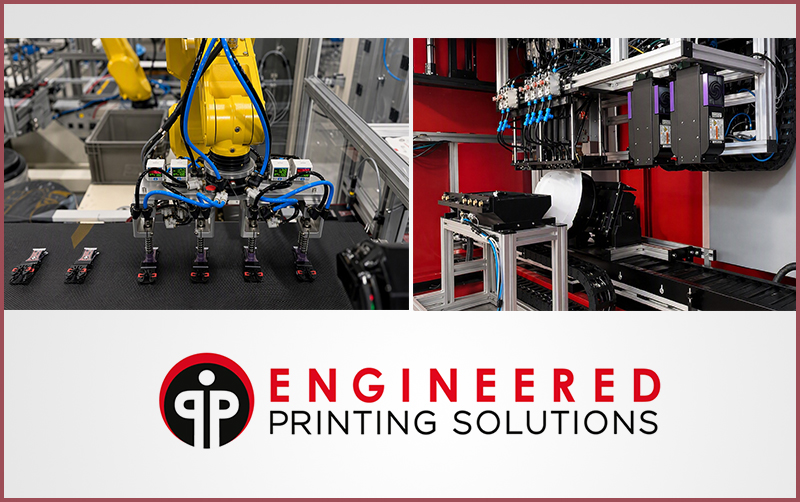
EPS says demand is no longer being driven only by print quality. Manufacturers are also asking how decoration can be connected with robotics, pretreatment, vision inspection, curing and material handling. The goal is to reduce manual setup, cut variation between shifts and make decoration easier to integrate into production lines.
The shift comes as labor remains a major issue for plastics processors. Plastics Machinery & Manufacturing’s January 2026 annual survey reported that nearly half of respondents said labor shortages hurt their businesses in 2025. The same report said 57% of respondents planned to buy robots or other automation equipment in 2026.
U.S. Bureau of Labor Statistics data also underline the labor-cost pressure. In April 2026, plastics and rubber products manufacturing employed 695,900 people, including 525,700 production and nonsupervisory workers. Average hourly earnings were USD 32.09 for all employees and USD 26.06 for production and nonsupervisory employees.
EPS has argued that labor is often the largest hidden cost in decoration, especially where operators must handle training, manual setup, turnover and shift-to-shift variation. In its white paper, The Shift in Direct-to-Object Printing, EPS says single-pass UV inkjet can reduce setup costs, improve labor efficiency and shorten payback periods in suitable applications.
A recent EPS article by Ken Stack, Executive Chairman, also says the company’s first 100 single-pass systems showed that the real return comes when printing is treated as a production system, not just a printer. EPS points to automated cells that combine feeding, pretreatment, single-pass printing, inline vision and offload as the direction of the market.
For manufacturers in plastics, packaging, promotional goods, medical, industrial and consumer products, the appeal is clear: fewer manual steps, more predictable changeovers, better traceability and more consistent decoration across shifts. As factories move from operator-assisted systems toward semi-autonomous and lights-out production, DTO printing is becoming part of the broader automation conversation.
https://epsvt.com/shift-direct-object-printing.
www.epsvt.com