


Fujifilm Opens India’s First House of Photography
21 October 2026: Fujifilm India’s first House of Photography in Mumbai brings the complete imaging journey from capture to print and from learning to community under one roof. More than a product showcase, it is a space where photography moves beyond the screen, transforming digital images into experiences that can be seen, shared and preserved.
Photography has never been easier to create. A camera or smartphone can capture an image in an instant, while digital platforms make sharing almost effortless. Yet somewhere between capture and sharing, an important part of the experience can get lost: the physical photograph.
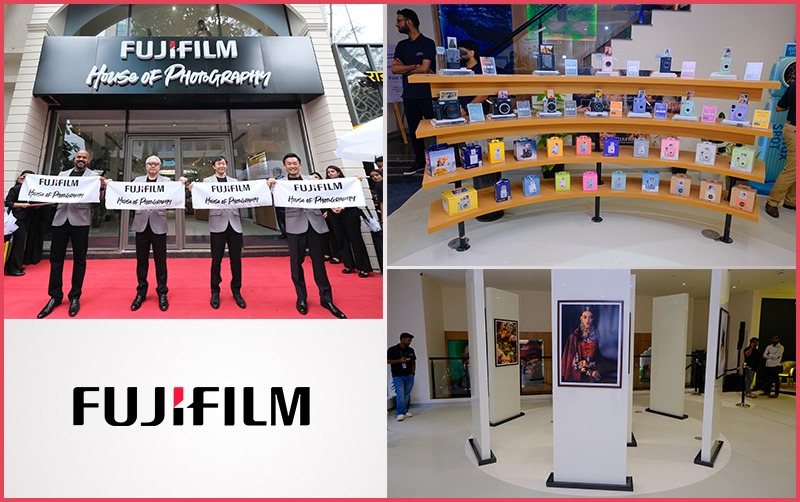
Fujifilm India is looking to address that gap with the opening of its first House of Photography in India. Located in Mumbai, the two-storey, approximately 5,800-sq.-ft. destination is Fujifilm’s eleventh House of Photography globally. The centre opened on August 19, 2026, on World Photography Day, in a year marking 200 years since the invention of photography.
But the House of Photography is positioned as more than an experience or retail centre. It brings together every stage of the process. From capturing and creating an image to learning, printing, displaying and preserving it in a single, connected space.
Yujiro Igarashi, General Manager, Imaging Business Division, Fujifilm, described the initiative as part of Fujifilm’s broader global vision of creating spaces that go beyond product showcasing to foster creativity, learning and community. He also highlighted India’s dynamic and creative market as an important reason for bringing the concept to the country.
Fujifilm describes the proposition as a “click to print” experience. The idea is particularly relevant at a time when photography has become predominantly digital. While an image can be viewed and shared countless times on a screen, a physical photograph offers a different kind of engagement: it can be held, displayed, revisited and passed on. The House of Photography places this physical dimension of photography prominently within its experience.
The ground floor is centred on hands-on product experiences. Visitors can explore Fujifilm’s Instax, X Series and GFX System cameras, along with QuickSnap single-use cameras and binoculars. There is also a live Instax print bar, an X Series discovery table and a dedicated GFX and lens display, supported by guided demonstrations. For the first time in India, Fujifilm is also showcasing its Z-Series projectors through a dedicated experience zone.
The first floor moves beyond products into what Fujifilm describes as a creative community hub. It includes a curated photo gallery, creator studio, workshop area, Pro Print Centre and dedicated enterprise imaging solutions. The gallery gives the “click to print” proposition a physical expression, allowing photographers to see their work not merely on a monitor or social media feed, but as prints that can be displayed and experienced.
Koji Wada, Managing Director, Fujifilm India, sees the House as a space dedicated to photographers, creators and visual storytellers of every generation. Reflecting Fujifilm’s Group Purpose of “Giving our world more smiles,” he hopes the House will enrich people’s lives by nurturing creativity, preserving memories and providing a welcoming space where stories can be shared.
The space is also intended to remain active beyond the launch. Fujifilm plans workshops, educational sessions, creator meet-ups, exhibitions and photo walks, creating opportunities for photographers, filmmakers, creators and enthusiasts to learn, collaborate and exchange ideas. In that sense, the company sees the House as a living community hub rather than a conventional retail environment.
The thinking behind the initiative becomes clearer in a conversation with Arun Babu, Associate Director, Imaging Solutions Division, Fujifilm India. Asked what Fujifilm saw as missing in the way people experience photography today, and what it wanted the House of Photography to change, he responded:
“The gap was two-fold. First, the imaging journey in India was largely fragmented. People could capture an image on a camera or smartphone, view it on a screen and share it digitally, but the journey often stopped there. There was limited opportunity to experience what comes after capture. From printing an image to seeing it displayed and experienced as a physical photograph.
The second gap was around community and experience. While there are spaces to discover and purchase imaging products, there are fewer destinations designed around learning, experimentation, creativity and community building.
We wanted to bring these two dimensions together: a complete imaging journey from capture to print, and a dedicated space for India’s imaging community to learn, create and connect.”
The distinction between a showroom and a community destination is important. Fujifilm is positioning the House of Photography as more than a place to see and experience products; it is intended as a space where imaging technology, art and storytelling come together, and where people can engage with photography at different stages of the creative process.
This naturally raises another question: how does Fujifilm intend to measure the success of an initiative like this, and does it see the concept extending beyond Mumbai? In response, Arun Babu says:
“Success will be measured by how meaningfully the space engages with the imaging community over time. Fujifilm will look at participation and repeat engagement across workshops, creator meet-ups, exhibitions, photo walks and other community-led initiatives, as well as how often visitors return to learn, create and connect.
The company will also look at how effectively the space enables people to experience the broader imaging journey firsthand. From exploring cameras and technologies to printing, exhibiting and preserving images.
There are no specific cities or timelines to announce for expansion at this stage. The immediate focus is on building the Mumbai House of Photography into a meaningful, lasting hub for the city’s storytelling community, while learning from the experience and continuing to engage with communities across India.”
Even the physical design reinforces the positioning. Inspired by India’s architectural heritage, the space combines elements of traditional design with Art Deco influences, reflecting Mumbai’s own photographic and cinematic legacy.
For Fujifilm, the House of Photography represents an attempt to make the imaging experience more tangible at a time when much of it has moved onto screens. Its success will be reflected not simply in the number of people who walk through its doors, but in the extent to which they return to participate, create, print, exhibit, learn and connect.
The Mumbai House of Photography is, in that sense, an attempt to give photography a fuller physical experience. From click to print, and from individual image-making to community.
Vimal Parmar
Vimal Parmar is an experienced marketing consultant and print evangelist, with over 40 years of experience in the photo imaging industry. A distinguished educator, effective communicator, adept marketer and trusted advisor, he is acknowledged for his substantial contributions to advancing the cause of photo printing.


Sorry, the comment form is closed at this time.