



India’s Integrated Textile Census Draft Covers 15 Industry Segments
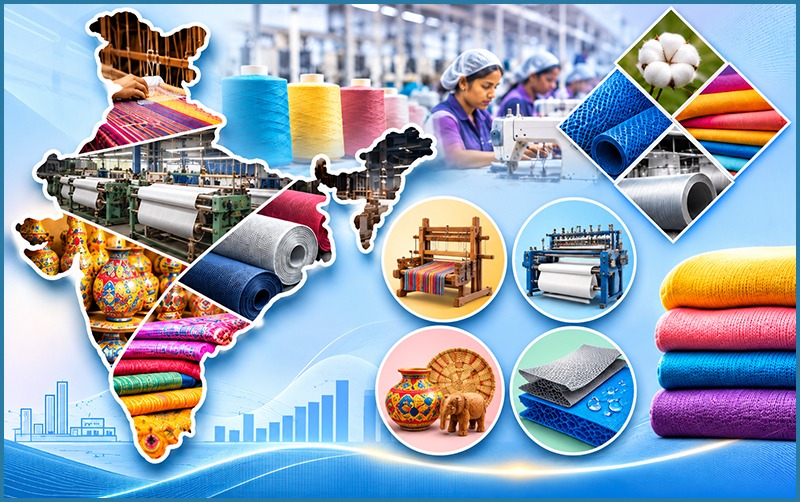
28 November 2026: India’s Ministry of Textiles released a draft questionnaire for the Integrated Textile Census on 16 October 2026, setting out how it proposes to survey 15 industry segments nationwide. The census would bring household producers and industrial establishments into one database, giving policymakers a clearer picture of where people work and how much textile units can produce.
The Ministry’s consultation notice set 16 November 2026 as the deadline for public feedback. It proposes using common definitions, one digital platform and a single field operation for household and establishment-based handloom, powerloom and handicraft units.
The information gap predates the questionnaire. An August 2025 Ministry of Textiles task force report found that sector statistics were fragmented and often lacked the detail policymakers needed. For background on support for smaller textile businesses, see the Integrated Textile and Apparel Development Centres.
What would the Integrated Textile Census cover?
The draft questionnaire lists 15 segments: powerloom, handloom, handicrafts, cotton ginning and pressing, spinning, processing, knitting, garment manufacturing, made-ups such as home textiles, man-made fibres, synthetic filament yarn, technical textiles, silk, jute and wool.
The Ministry proposes using 1 April 2025 to 31 March 2026 as the reference period for production, sales, expenditure and employment. Survey teams would count machines, looms and tools as of the survey date. If a business carries out several activities, the draft’s counting rules call for recording each worker, machine or investment only once, under the relevant process.
What the census would ask textile printers
The processing section asks units which printing methods they use, including flat-bed and rotary screen printing, digital inkjet, and transfer or sublimation. It would record daily printing capacity, the age of equipment and why any machines stood idle throughout the reference year. Possible reasons include a shortage of orders, power cuts or breakdowns.
The form distinguishes production with a unit’s own materials from job work on materials supplied by customers. It asks processors to identify their two main types of buyers or job-work customers by value.
Another set of questions asks about water consumption and whether a processor has its own effluent treatment plant, shares one or has none. Those answers could show where processors lack access to treatment.
How the draft treats technical textiles
The technical textiles section asks about end uses such as healthcare, construction, transport and sport. It also asks about testing, research spending and resource efficiency. For a closer look at one of those applications, see sports textile research.
Why count household workers separately?
Several sections of the draft distinguish unpaid household members from owners, formal employees and informal workers, and ask for workforce figures by gender. Counting unpaid family workers gives policymakers a fuller picture of who works in a textile cluster than a tally of paid staff alone.
Finding units to count is part of the job. A 7 October 2026 order from the Union Territory of Ladakh set up a committee to oversee census preparations there. The order asks the committee to address unregistered and seasonal units, hard-to-reach locations and non-response.



Sorry, the comment form is closed at this time.