



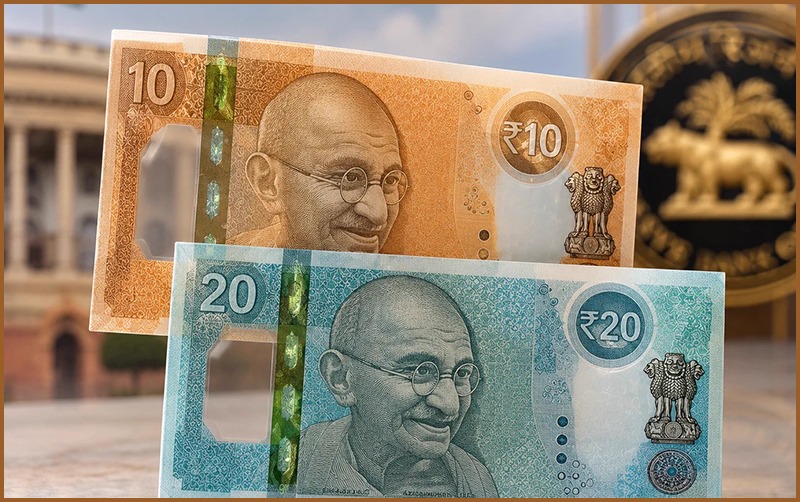
RBI Plans Trials of Rs.10 and Rs.20 Polymer Banknotes in Early 2027
07 November 2026: The Reserve Bank of India (RBI) is preparing to conduct field trials of Rs.10 and Rs.20 polymer banknotes, with the pilot programme expected to begin in early 2027. The initiative represents a significant development in India’s currency printing technology, aimed at improving banknote durability, security and operational efficiency.
The Government of India has approved the RBI’s proposal to introduce 100 crore polymer banknotes in each denomination, representing 200 crore notes with a combined face value of Rs.3,000 crore. The approval was confirmed in Parliament in July 2026.
According to an October 30 report, the pilot rollout could begin around April 1, 2027, although the schedule remains subject to procurement, testing and operational readiness. Polymer banknotes are manufactured using specialised plastic substrates, generally biaxially oriented polypropylene (BOPP), instead of conventional paper-based materials. They offer greater resistance to moisture, dirt, tearing and repeated handling, making them particularly suitable for lower-denomination currency circulating frequently.
RBI Governor Sanjay Malhotra has indicated that polymer banknotes could last approximately two to four times longer than conventional paper notes, potentially reducing replacement frequency and long-term currency management costs.
The RBI’s subsidiary, Bharatiya Reserve Bank Note Mudran (P) Ltd. (BRBNMPL), has initiated procurement of specialised polymer substrates. The tender reportedly covers 68,000 reams of material, including opacifying coatings and anti-static treatments designed to support printing performance and ink adhesion.
The trials will evaluate banknote performance under India’s diverse climatic and handling conditions, including heat, humidity, dust and repeated folding. Printing quality, security features, machine compatibility and public acceptance will also be important considerations.
Polymer substrates enable advanced security features, including transparent windows and specialised anti-counterfeiting elements. These developments create opportunities for security printing technology providers, specialty ink manufacturers, coating suppliers and substrate producers.
Importantly, the government has clarified that polymer banknotes will circulate alongside existing paper currency, with no immediate proposal to replace conventional banknotes entirely.
Countries including Australia, Canada, Singapore and the United Kingdom already use polymer currency.
Successful trials could eventually support wider adoption of polymer banknotes in India, opening opportunities for advanced security printing, functional coatings, specialised substrates and high-performance currency production technologies.


Sorry, the comment form is closed at this time.