


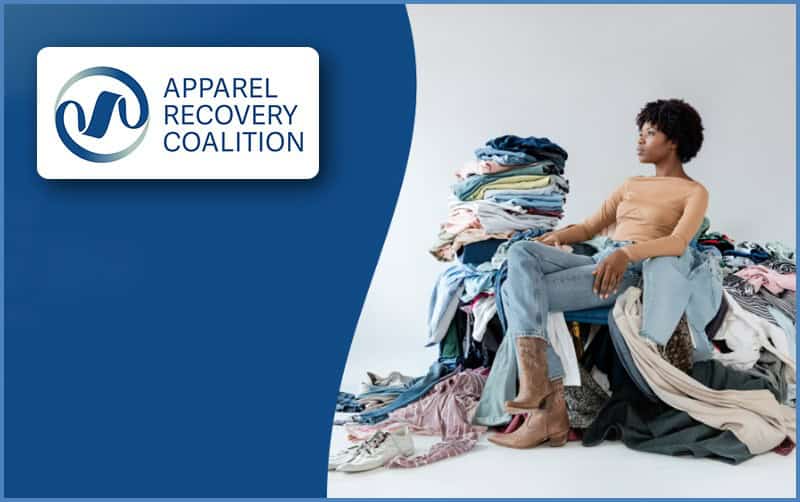
Apparel Recovery Coalition Starts in Ghana to Address Textile Waste
13 October 2026: The Apparel Recovery Coalition (ARC), co-founded by adidas, H&M Group, Inditex, BESTSELLER and The Or Foundation, launched at Kantamanto Market in Accra, Ghana, according to a 29 September 2026 announcement. It will test producer-responsibility funding for textile reuse and waste management in countries receiving secondhand clothing.
How the Apparel Recovery Coalition will work
ARC addresses a mismatch between where clothing first sells and where it eventually becomes waste. According to the coalition’s stated mission, producer-responsibility systems mainly support the original sales markets, while exported used garments can leave communities elsewhere managing the environmental costs.
Over its two-year programme, ARC plans to develop and test a producer-responsibility blueprint that follows these cross-border flows. Brands, producer responsibility organisations, sorting companies, recyclers, policymakers and affected communities will help shape the work. The aim is to connect funding with practical support for collection, sorting, reuse, upcycling, recycling and responsible waste management.
Sorting and recovery are part of that wider chain. Screen Print India’s earlier coverage of textile sorting and traceability provides context on a separate industry effort to improve the handling of used garments.
Why start at Kantamanto Market?
Kantamanto combines secondhand clothing sales with repair and upcycling. The Or Foundation estimates that the market recirculates around 25 million garments each month. This is a measure of garments returned to use, not the volume arriving as imports, and it remains the organisation’s estimate rather than an independently verified count.
The launch announcement also identifies water and soil pollution as concerns associated with the scale of post-consumer textiles. Ghana’s demonstration project therefore starts with an existing reuse economy; it does not assume that recycling alone can address every discarded garment.
Ghana project will build on local recovery systems
According to the launch announcement, ARC’s first demonstration project will build on The Or Foundation’s 15 years of work in Ghana. The foundation will organise initiatives across Accra, including infrastructure improvements at Kantamanto Market, environmental remediation and training programmes.
The coalition also wants affected communities to help decide priorities and shape implementation. Its website describes community participation in governance and project design as an objective, rather than a result already achieved.
For a separate Indian example of including people who handle discarded textiles, Screen Print India has reported on worker-led textile recycling in Bengaluru. That initiative is distinct from ARC’s Ghana project.
Voluntary funding, with another project planned
Voluntary contributions during 2026 and 2027 will come from adidas, BESTSELLER, H&M Group and Inditex. ARC operates through an independent foundation registered in the Netherlands, with Circle Economy serving as its secretariat. ARC intends to add at least one demonstration project in another country receiving secondhand apparel. The launch announcement does not name that country, so the expansion remains a plan.
The coalition hopes its findings will inform brands and policymakers working on post-consumer textile systems. Its remit differs from a specific material-recycling development, such as the BASF and Inditex recycling project: ARC is testing how producer funding and local participation can support recovery where exported garments end up. The launch announcement does not report a measured reduction in textile waste.


Sorry, the comment form is closed at this time.