


Sontara sustainable printing range adds recycled-PET cloths
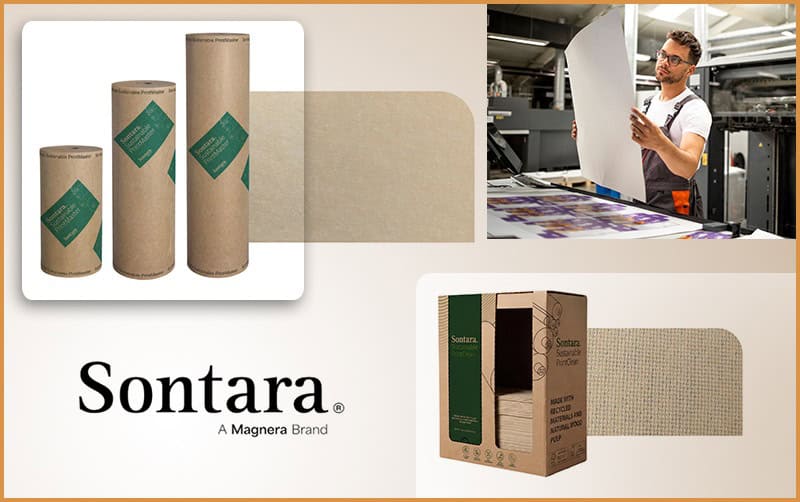
17 October 2026: Sontara, a Magnera brand, announced a new cleaning range for offset printers on 1 October 2026. Developed and manufactured in Europe, the Sontara sustainable printing range combines Sustainable PrintMaster for automatic blanket cleaning with Sustainable PrintClean for manual work, offering pressrooms recycled-material alternatives for routine cleaning.
What does the Sontara sustainable printing range include?
Both products combine post-consumer recycled PET, or rPET, with natural wood pulp. Sontara says the recycled PET comes from Global Recycled Standard (GRS)-certified suppliers. That supplier claim should not be confused with certification of the finished cloth. The company attributes the brown appearance to natural pulp and reduced chemical processing.
Sontara’s printing-cloth portfolio distinguishes the two applications:
- Sustainable PrintMaster: A washcloth for automatic blanket cleaning (ABC) systems. Sontara says it distributes cleaning agents evenly and combines controlled thickness with strength for residue-free blanket cleaning.
- Sustainable PrintClean: A manual-cleaning alternative to textile rags. Its textured surface provides a scrubbing action for removing ink, paper fibres and other residues. Applications include blankets, rollers, printing plates and general pressroom maintenance.
What does Fogra certification confirm?
Fogra’s certified washcloth database lists Sontara Sustainable Printmaster under manufacturer Glatfelter Sontara Asturias S.A.U. This independently confirms the product’s certification. Sontara describes it as the first rPET-based ABC washcloth to achieve that approval.
The announcement identifies Sustainable PrintMaster as the certified product; it does not make the same claim for Sustainable PrintClean. Washcloth approval also differs from the printing-process certification discussed in Screen Print India’s coverage of Pragati Offset’s PSO certification. Printers should keep those scopes separate when describing their credentials.
What do the emissions figures actually measure?
Sontara reports 40% lower product CO₂ emissions than its standard printing cloths. The qualification matters: this comes from Magnera’s internal cradle-to-gate life-cycle assessment, not a full-life-cycle comparison. The company states that the results have not undergone third-party review and should serve as directional guidance only.
The separate claim of up to 70% lower transport-related CO₂ emissions compares deliveries to Paris, France, from Asturias, Spain, with deliveries from Hainan, China. It is a route-specific assessment, not evidence of the same saving for every destination or for Indian printers.
For businesses already reviewing environmental criteria for offset inks, cleaning cloths add another consumable to assess. Buyers should retain the stated comparison boundaries rather than treating either percentage as a reduction in their pressroom’s total emissions.
What should pressrooms check before switching?
“Printers are under increasing pressure to improve sustainability, but performance remains non-negotiable,” said Lorenzo Vaira, Product Manager Europe, Sontara and Chicopee, in the launch announcement.
Sontara says the range retains the cleaning performance of its existing products and was available at launch. The release does not specify Indian pricing or distribution arrangements.
Before ordering, confirm cloth dimensions, cleaning-agent compatibility, pressmaker requirements and local supply with the supplier. Assess cleaning results under the pressroom’s actual operating conditions. For teams reviewing production checks alongside consumable changes, Fogra’s offset-control training provides background on measurement and printing standards, a separate subject from washcloth certification.

Sorry, the comment form is closed at this time.